If someone told you a thin needle inserted into a muscle could eliminate the knot that’s been torturing your shoulder for six months, you’d probably want to know more. And if your first thought was, “Wait — is that acupuncture?” — you’re not alone. That question comes up constantly.
The short answer: dry needling and acupuncture use the same tool but are built on completely different science and target completely different problems. Understanding that difference could change how you approach your own pain.
The Tool Is the Same. The Approach Is Not.
Both treatments use a thin monofilament needle — the kind with no hollow center and no medication inside. That’s where the similarities end.
Acupuncture is rooted in Traditional Chinese Medicine, a system developed over thousands of years. It works by inserting needles along energy pathways called meridians, with the goal of restoring the flow of qi (life energy) throughout the body. It treats the whole person — digestive issues, insomnia, emotional health, chronic systemic conditions. It’s a complete medical philosophy.
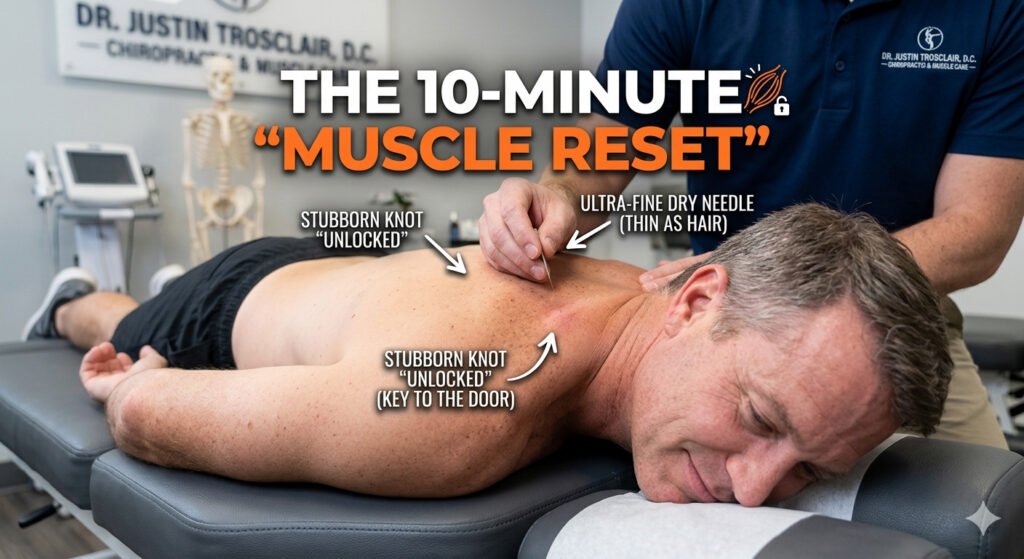
Dry needling comes from Western medicine and musculoskeletal science. It was developed in the 20th century based on research into how muscles develop painful, hyperirritable spots — called trigger points / tender spots — that refer pain to other areas of the body and resist normal stretching and massage. Dry needling targets those tender spots directly using a precise, anatomically-guided approach.
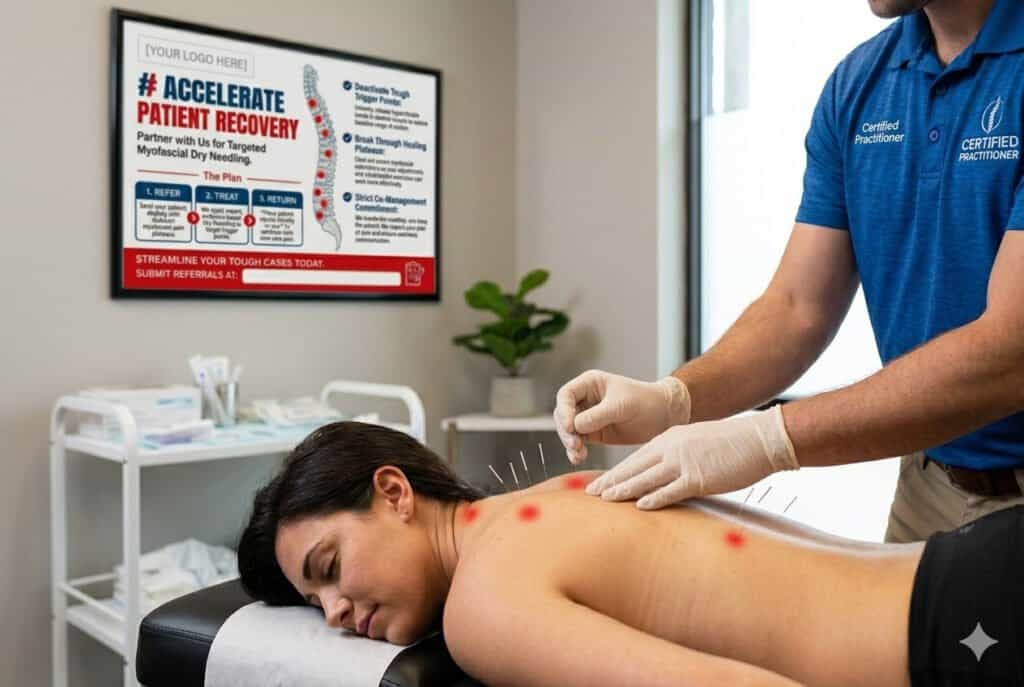
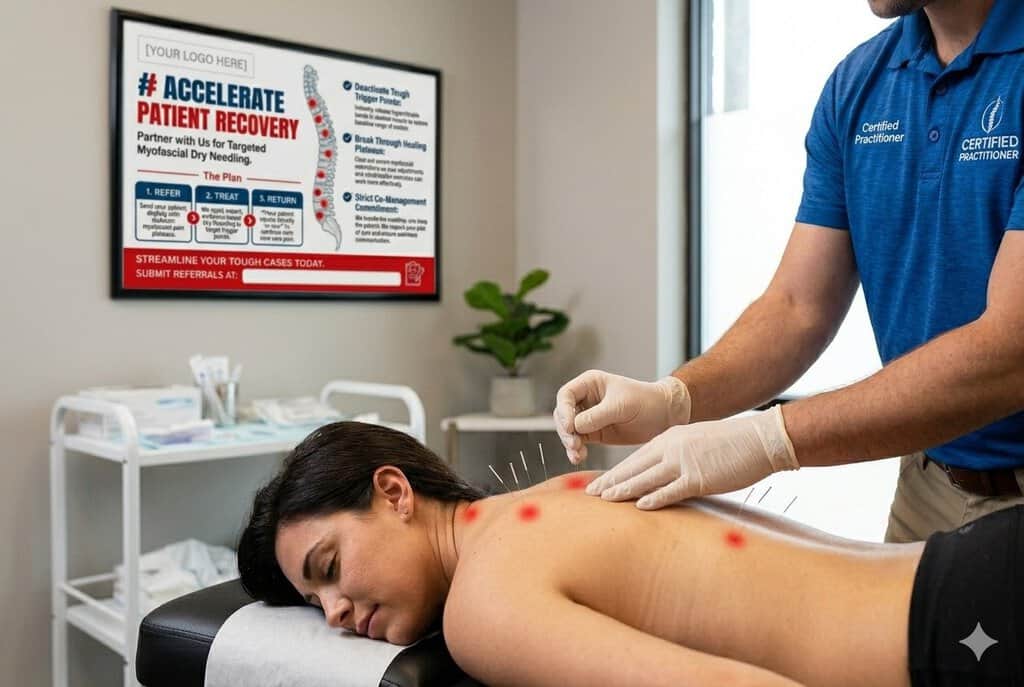
When a dry needling provider inserts a needle into a tender spot, the goal is to create what’s called a local twitch response — a brief, involuntary contraction of the muscle fiber. That twitch is actually a good sign. It indicates the needle has engaged the tender spot, which disrupts the dysfunctional contraction cycle and allows the muscle to release, restore circulation, and begin healing.
What Is a Tender Spot , Exactly?
Tender spots are something most people have but few can name accurately.
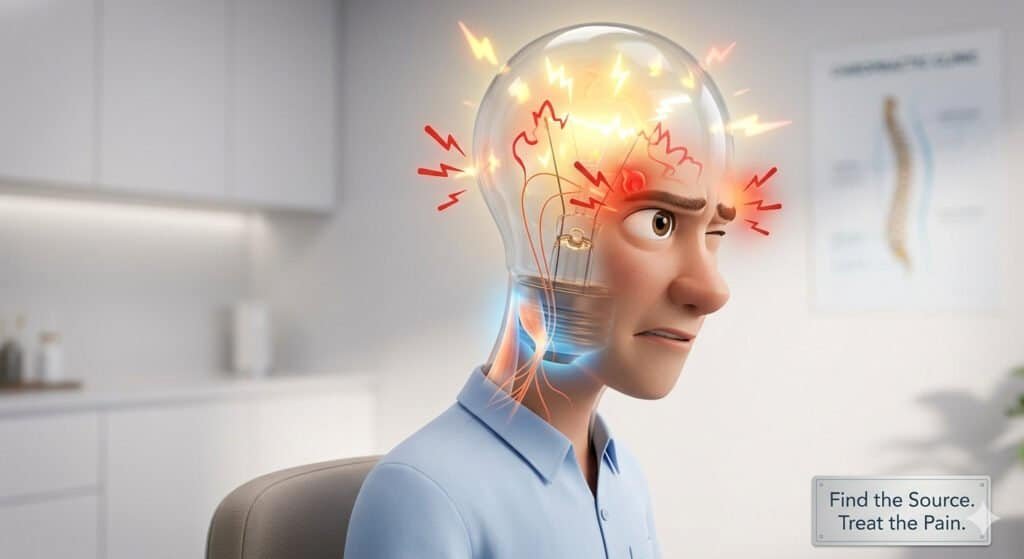
You know that spot in your upper trap — the one you dig your thumb into when you’re stressed and it sends a dull ache up toward your skull? That’s likely a tender spot or trigger point. They form when muscle fibers get locked in a sustained contraction, cutting off their own blood supply and accumulating metabolic waste. The area becomes hypersensitive, refers pain in predictable patterns to other parts of the body, and often doesn’t respond well to rest, stretching, or conventional massage because the problem is happening at the neurological level, not just mechanically.
Tender spots develop from:
- Repetitive overuse or awkward sustained postures
Acute injury where the muscle was overstrained
Compensatory loading — when other muscles are weak or injured and nearby muscles pick up the slack
Chronic poor posture over months or years
For patients dealing with spinal conditions, postural problems, or recovering from injury, trigger points are almost always part of the picture. The muscles compensating for structural issues tend to develop them first and worst.
Why “Dry”?
The name comes from the fact that no substance is injected. This distinguishes it from “wet needling,” which involves injecting a solution (like a local anesthetic or saline) through a hypodermic needle. Dry needling uses only the mechanical effect of the needle itself.
That’s actually one of its strengths. The response comes from your own tissue, not a drug. The twitch and the subsequent muscle release are biological processes that the needle facilitates — it doesn’t produce them chemically.
Who Performs Dry Needling?
This is an important question and the answer varies by state. Dry needling is performed by licensed healthcare providers who have completed specific post-graduate training in the technique — chiropractors, physical therapists, and some physicians. It requires understanding of anatomy, pain neuroscience, and musculoskeletal assessment well beyond what a basic license covers.
Acupuncture is performed by licensed acupuncturists who complete a graduate degree specifically in that discipline.
Neither is “better” universally — they serve different purposes. Someone seeking help with fertility, anxiety, or digestive health might be well-served by acupuncture. Someone dealing with a rotator cuff that won’t release, a piriformis causing sciatic symptoms, or neck muscles in chronic spasm after a car accident is likely a candidate for dry needling.
What Dry Needling Is Particularly Good At
The research on dry needling is strongest in these areas:
- Neck and upper back pain — particularly tension-related and postural
* Low back pain — especially when muscle guarding is part of the picture and sciatica
* Shoulder pain — rotator cuff, impingement, frozen shoulder presentations
* Hip and gluteal pain — piriformis syndrome, hip flexor tightness
* Headaches — particularly tension-type and cervicogenic headaches originating in the neck
* Knee and leg pain — when IT band, quad, or hamstring trigger points are contributing
* Jaw pain (TMJ) — masseter and pterygoid trigger points respond well to needling
What makes it especially valuable in a comprehensive care setting is how well it complements other therapies. Cold laser, spinal decompression, and corrective exercise all work better when the muscular layer has been addressed. A spine that’s decompressed but surrounded by chronically tight muscles tends to tighten back up. Needling the muscles that guard and compensate changes that equation.
The Honest Summary
Dry needling is not acupuncture. It’s a clinically-directed, anatomy-based intervention that targets a specific physiological problem — the Tender spots — and produces a measurable biological response. It draws on modern pain neuroscience and musculoskeletal research, and it’s performed by providers trained in Western clinical assessment.
If you have pain that’s stuck — the kind that doesn’t resolve with standard treatment, that keeps coming back, that refers to strange places, or that seems out of proportion to what caused it — there’s a reasonable chance a trigger point is involved. And if that’s the case, dry needling is worth an honest conversation with your provider.
If you are curious if dry needling (or shockwave i)s best for you, reach out.
Dr. Justin Trosclair, D.C. offers dry needling as part of a comprehensive musculoskeletal and spinal care approach at his Lafayette, Louisiana clinic. If you’re dealing with stubborn pain and want to understand whether dry needling might help, schedule a consultation 1 337 453 5199 to discuss your specific situation.