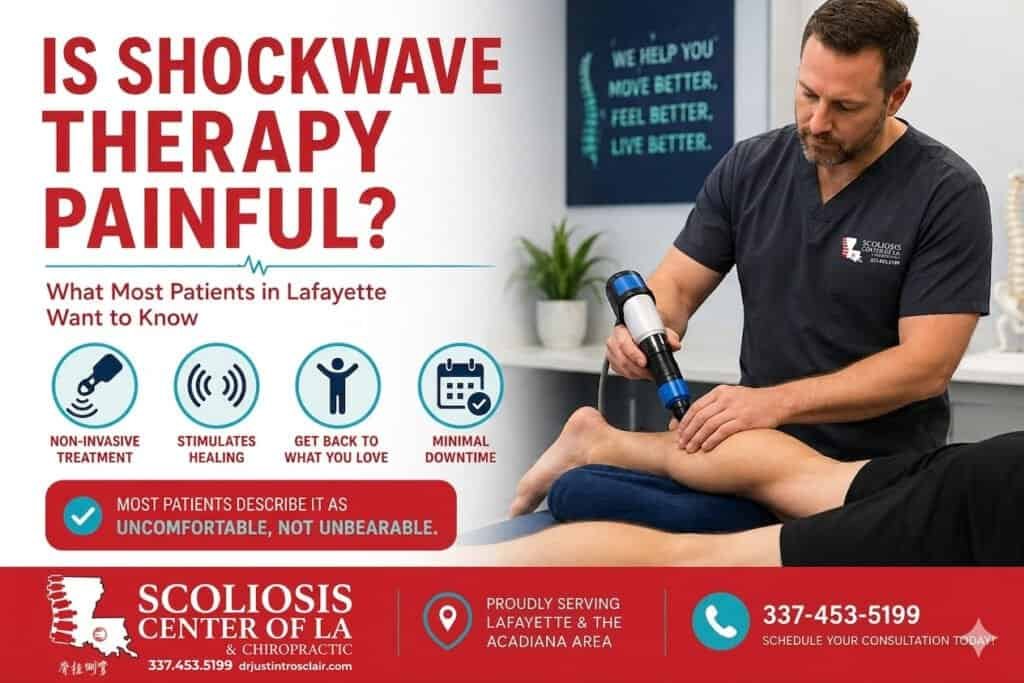
Tired of heel pain, tennis elbow, or knee pain that just won’t go away? Wondering if shockwave therapy works but worried it’s going to hurt?
That is one of the most common questions we hear at the Scoliosis Center of Louisiana.
The short answer is:
Shockwave therapy can be uncomfortable, but most patients tolerate it very well.
In fact, many patients tell us they expected it to be much worse than it actually was.
Let’s talk about what shockwave therapy feels like, why some people experience discomfort, and what you can expect during treatment.
What Is Shockwave Therapy?
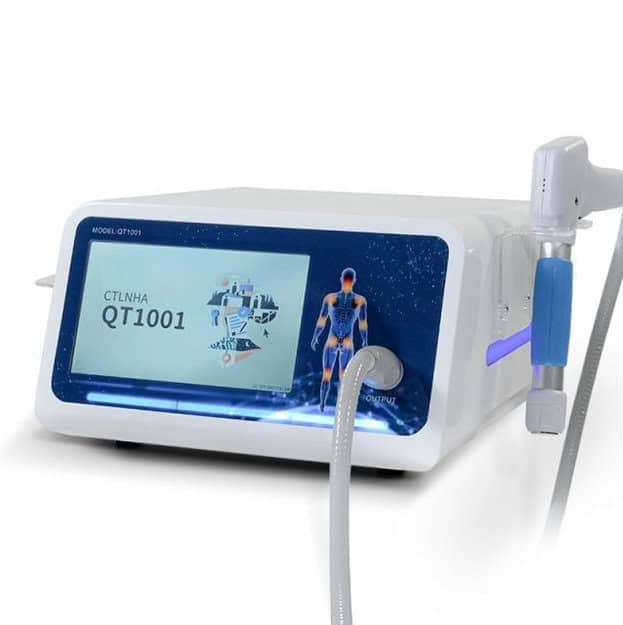
Shockwave therapy uses acoustic pressure waves to stimulate injured tissues.
These pressure waves are delivered through a handheld device placed on the skin.
Shockwave therapy is commonly used for:
- Plantar fasciitis
Achilles tendon pain
Tennis elbow
Golfer’s elbow
Jumper’s knee
Hip tendon pain
Chronic shoulder pain
Unlike injections, shockwave therapy does not use needles.
Unlike medications, it doesn’t simply cover up pain.
The goal is to stimulate the body’s natural healing response.
Why Can Shockwave Therapy Feel Uncomfortable?
Many chronic injuries contain damaged tissue that has been irritated for months or even years.
When shockwave therapy is applied directly to these areas, patients often notice:
- A tapping sensation
Deep pressure
Mild soreness
Tenderness over the injured tissue
Interestingly, the areas that are most sensitive often help us locate the tissue causing the problem.
How Painful Is It on a Scale of 1 to 10?
Most patients report somewhere between:
3 to 6 out of 10 during treatment.
Some treatments feel almost painless. Others can be more intense depending on:
- Location of injury
- Severity of injury
- Length of time symptoms have been present
- Individual pain tolerance
At our Lafayette office, treatment settings are adjusted based on each patient’s comfort level.
This is not a “no pain, no gain” treatment.
More intensity is not always better.
What Happens After Treatment?
Most patients experience:
- Mild soreness
Temporary tenderness
A feeling similar to a workout
This typically resolves within a day or two. Many patients continue normal daily activities immediately afterward.
Does More Pain Mean Better Results?
No.
This is one of the biggest misconceptions about shockwave therapy. Research does not suggest that making treatment excessively painful produces better outcomes. In fact, overly aggressive treatment can make some patients hesitant to continue care. Our goal is to provide an effective treatment while keeping patients comfortable.
How Many Treatments Are Needed?
Most conditions respond best to a series of treatments.
Many patients receive:
4 to 6 sessions Once weekly
The exact number depends on:
The condition being treated How long symptoms have existed Activity level Overall health Conditions That Often Respond Well
Shockwave therapy is commonly used for:
Plantar Fasciitis
Many patients with heel pain have already tried:
- Stretching
Orthotics
Anti-inflammatory medications
Shockwave therapy may help stimulate healing when those treatments haven’t worked.
- Tennis Elbow and Frozen Shoulder
Chronic tendon injuries around the elbow often respond well to shockwave therapy.
Jumper’s Knee
Athletes frequently seek treatment when knee pain interferes with sports and exercise.
Hip Tendon Pain
Shockwave therapy is increasingly used for greater trochanteric pain syndrome and chronic hip tendon irritation.
Frequently Asked Questions
Can shockwave therapy damage tissue?
No. Shockwave therapy is designed to stimulate tissue repair, not destroy tissue.
Can I drive afterward?
Yes.
Is there downtime?
Most patients return to normal activities immediately.
Does shockwave therapy hurt more than dry needling?
Some patients find shockwave more comfortable because no needles are involved.
Is shockwave therapy worth trying?
Many patients seek shockwave therapy after months or years of unsuccessful treatments.
Ready to See If Shockwave Therapy Is Right for You?
If chronic pain is keeping you from walking, exercising, working, or enjoying life, we may be able to help.
Scoliosis Center of Louisiana
Dr. Justin Trosclair, DC
📞 337-453-5199 Call or Text Today to get scheduled
Serving Lafayette, Youngsville, Broussard, Scott, Carencro, and surrounding Acadiana communities.
Dr. Justin Trosclair, D.C. offers shockwave therapy as part of comprehensive musculoskeletal care in Lafayette, Louisiana. If you’ve been diagnosed with calcific shoulder tendinitis and haven’t found lasting relief, call the clinic 1 337 453 5199 or schedule a consultation to discuss whether shockwave therapy is right for you.