
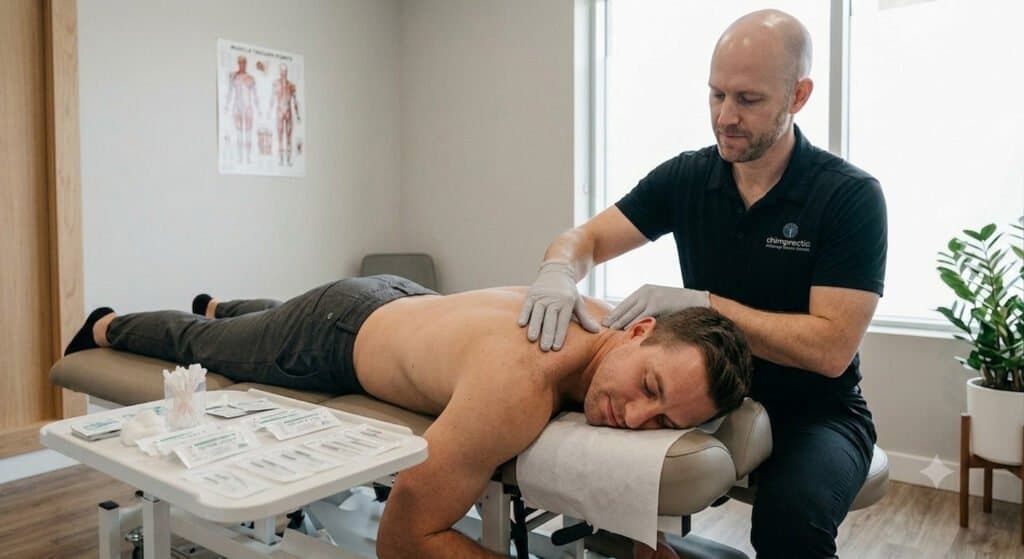
Most people who finally book a dry needling appointment waited months longer than they needed to.
Not because they didn’t want relief. They did. They were just stuck on a version of the same question: “But what is actually going to happen to me?”
That’s a fair question. Showing up to something you’ve never done before — something involving needles — without knowing what to expect is genuinely uncomfortable. So let’s fix that right now.
Here’s exactly what happens, from the moment you walk in to the moment you walk out feeling different than you walked in.
Step 1: We Find the Problem First
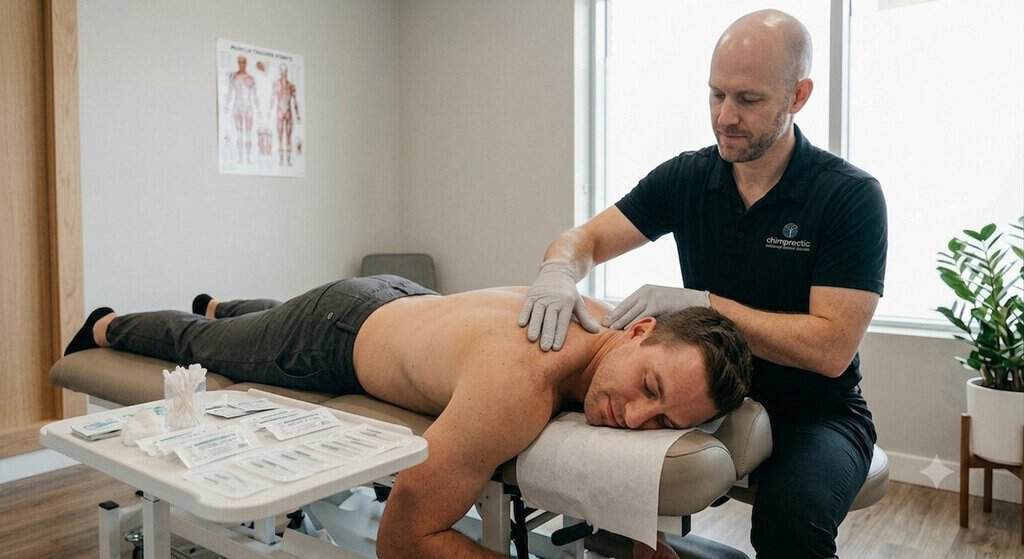
Dry needling isn’t something we do randomly. Before a single needle comes out, we talk.
Tell me where the pain is. Tell me what makes it worse. Tell me what you’ve already tried. Tell me if it’s been three weeks or three years.
Then I’m going to put my hands on the area and feel for it. Trigger points / tender spots have a very specific texture — a taut, ropy band inside the muscle that’s denser than the tissue around it. When I press on the right spot, one of two things happens: either you feel your familiar pain, or the ache travels somewhere else. That referral pattern tells me exactly what I’m dealing with.
And we are really looking for TENDER SPOTS. If it’s tender, that is reason enough to deliver a needle.
This part takes a few minutes. It matters a lot. We’re not guessing. We’re finding the exact location before we do anything else.
Step 2: The Needle Goes In — Here’s the Honest Description
The needle is solid, extremely flexible, and about the diameter of a human hair. This is not the needle they use to draw blood or give a shot. There’s no cutting edge, no hollow center, nothing being injected.
When it passes through the skin, most people feel almost nothing. The skin sensation is minimal. What you’re about to feel comes from what happens next.
When the needle reaches the trigger point / tender spot, your muscle does something called a local twitch response. It’s a quick, involuntary jump — the muscle briefly contracts and then releases. It happens fast.
Here’s the honest description of what that feels like: a deep, heavy, cramping ache — for about one to three seconds. Some people describe it as intense. Then it stops. And what follows is usually a sensation of the muscle letting go, a warmth in the area, and a feeling of looseness that wasn’t there before.
That twitch is exactly what we’re looking for. It means we’ve engaged the right tissue and the reset has happened.
Step 3: The Whole Thing Takes About 10 Minutes
We’re not in there for an hour. Dry needling is precise. Once we’ve addressed the trigger points / tender spots (doing a reset) contributing to your pain, we’re done. In most cases, the needling portion of a visit is 10 minutes or less.
What happens after that depends on what else is part of your care plan.
If you’re also getting an adjustment that day, we’ll move into that. If you’re here specifically for dry needling, you’ll spend a few minutes resting while the muscle settles, and then you’re on your way.
What You Might Feel After
This varies person to person, so I want to be upfront about the range.
* Some people feel immediate relief. The pain they walked in with is significantly reduced or gone. They feel lighter, looser, and wonder why they waited.
* Some people feel sore for 24 to 48 hours. Not sharp pain — more like the feeling after a hard workout in a muscle you hadn’t used in a while. This is normal. It’s the tissue responding and healing. Drinking extra water and gentle movement help it resolve faster.
* Some people need two or three sessions. If a trigger point has been there for months or years, it may need more than one visit to fully release. We’ll tell you honestly what to expect based on what we find.
What almost nobody experiences is the thing they were dreading — a traumatic, painful procedure that leaves them worse off. That’s not what this is.
The Question I Get Every Single Time
“How long until I notice a difference?”
Most people notice something within the first 24 to 48 hours. The full effect of a session often peaks around day two or three as the muscle completes its release process and circulation is restored to the area.
For chronic pain that’s been building for a long time, the first session is usually a significant step forward — but not always the finish line. We’ll be honest with you about where you are and what the realistic timeline looks like.
One More Thing About the Needles
I know we already talked about this. But because it’s the number one thing holding people back, I want to say it one more time.
Almost every patient who comes in nervous about the needle says the same thing afterward. Word for word, it’s almost always some version of: “That was way easier than I thought. I can’t believe I put this off.”
The anticipation is worse than the experience. Nearly every single time.
If you were afraid of the dentist as a kid, you know this feeling — the waiting room anxiety doesn’t match what actually happens in the chair. Dry needling is the same story. Like we said in other articles, it’s not the same as acupuncture even though the needles are about the same.
How to Get Started
You don’t need a special appointment or a separate consultation. If you’re already a patient, just tell us at your next visit that you want to add dry needling. We’ll assess you that day and, if it makes sense, treat you that day.
If you’re not a patient yet and dry needling is what brought you in — welcome. We’ll do a full assessment, figure out what’s driving your pain, and build a plan that actually addresses it.
The knot you’ve been living with has a solution. You just needed to know what to expect.
Dr. Justin Trosclair, D.C. offers dry needling as part of comprehensive spinal and musculoskeletal care in Lafayette, Louisiana. Call or text the clinic 1 337 453 5199 or ask about dry needling at your next visit. You can always visit our comparison of dry needling and shockwave therapy.