You’ve tried stretching. You’ve tried resting. Maybe you’ve tried massage, medications, or physical therapy.
Yet the pain keeps returning.
Now you’re researching two treatments:
Dry Needling
Shockwave Therapy
Which one is right for you?
The answer depends on one simple question:
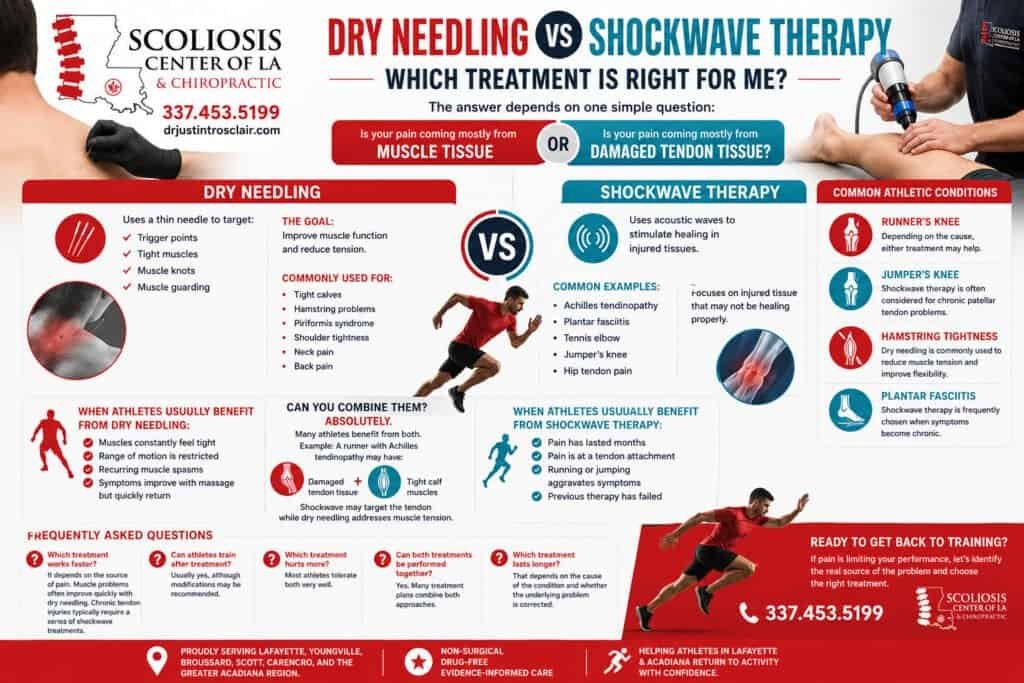
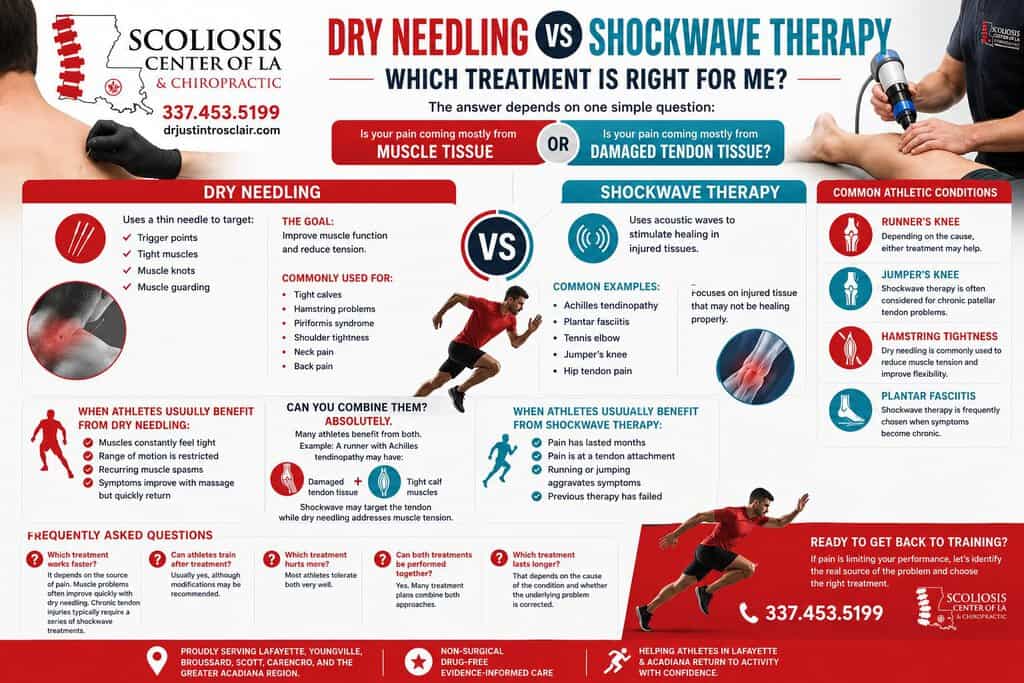
Is your pain coming mostly from muscle tissue or damaged tendon tissue?
Understanding Dry Needling
Dry needling focuses primarily on muscles.
A thin needle is inserted into trigger points or tight muscle bands.
The goal is to:
- Reduce muscle tension
Improve movement
Decrease pain
Restore normal muscle function
Conditions commonly treated include:
- Neck pain
Back pain
Piriformis syndrome
Muscle tightness
Shoulder tension
Headaches
Understanding Shockwave Therapy
Shockwave therapy focuses primarily on chronic soft tissue injuries.
Conditions commonly treated include:
Plantar fasciitis
Tennis elbow
Achilles tendinopathy
Jumper’s knee
Hip tendon pain
Chronic shoulder tendon pain
Quick Comparison
Dry Needling Shockwave Therapy
Targets muscles Targets tendons and chronic tissue injuries
Uses needles No needles
Often improves muscle tightness quickly Often helps chronic injuries heal over time
Tender points Tendinopathy and chronic pain
Which Is Better for Sciatica?
If muscle tension around the piriformis contributes to symptoms, dry needling may help.
Which Is Better for Plantar Fasciitis?
Shockwave therapy is often considered for stubborn plantar fasciitis that has not improved with traditional care.
Which Is Better for Athletes?
Many athletes benefit from both depending on the source of symptoms.
Why an Evaluation Matters
The biggest mistake is choosing a treatment before identifying the source of pain.
Two patients may both have “hip pain” but require completely different approaches.
That’s why a proper examination matters.
Frequently Asked Questions
Can dry needling and shockwave be combined?
Yes
Does insurance cover these treatments?
Coverage varies by plan.
Which treatment works faster?
Muscle problems often respond faster to dry needling. Chronic tendon injuries generally require several shockwave treatments.
Which treatment is less painful?
Most patients tolerate both very well.
Which treatment lasts longer?
That depends on the cause of the condition and whether the underlying problem is corrected.
Find Out Which Treatment Fits Your Condition especially if you’re a weekend warrior.
At the Scoliosis Center of Louisiana, Dr. Justin Trosclair performs a detailed evaluation to determine the source of your pain and recommend the most appropriate treatment.
Call or text 337-453-5199 today.
Serving Lafayette, Youngsville, Broussard, Scott, Carencro, and the greater Acadiana region.
Schedule your consultation and start moving better.